Cast-in anchor plates are the backbone of precast concrete connections — the steel plates cast into panels, beams, and columns so they can be bolted or welded together on site. Getting them right means specifying the anchors, plate, and coating correctly before fabrication. This guide explains how cast-in anchor plates work, how to design and supply them, and how to source them factory-direct from China.
What Is a Cast-In Anchor Plate?
A cast-in anchor plate (also called a cast-in plate or, in North America, an embed plate) is a steel plate positioned in formwork with anchors welded to its back face. When concrete is poured and cured, the anchors lock the plate permanently into the concrete, leaving a flush steel face for a later connection.
Anchor plates carry structural load from steelwork, cladding, or equipment into the concrete, so anchor type and layout are engineered to resist pull-out and shear. For the difference between anchor plates, embed plates, and weld plates, see our buyer’s glossary.
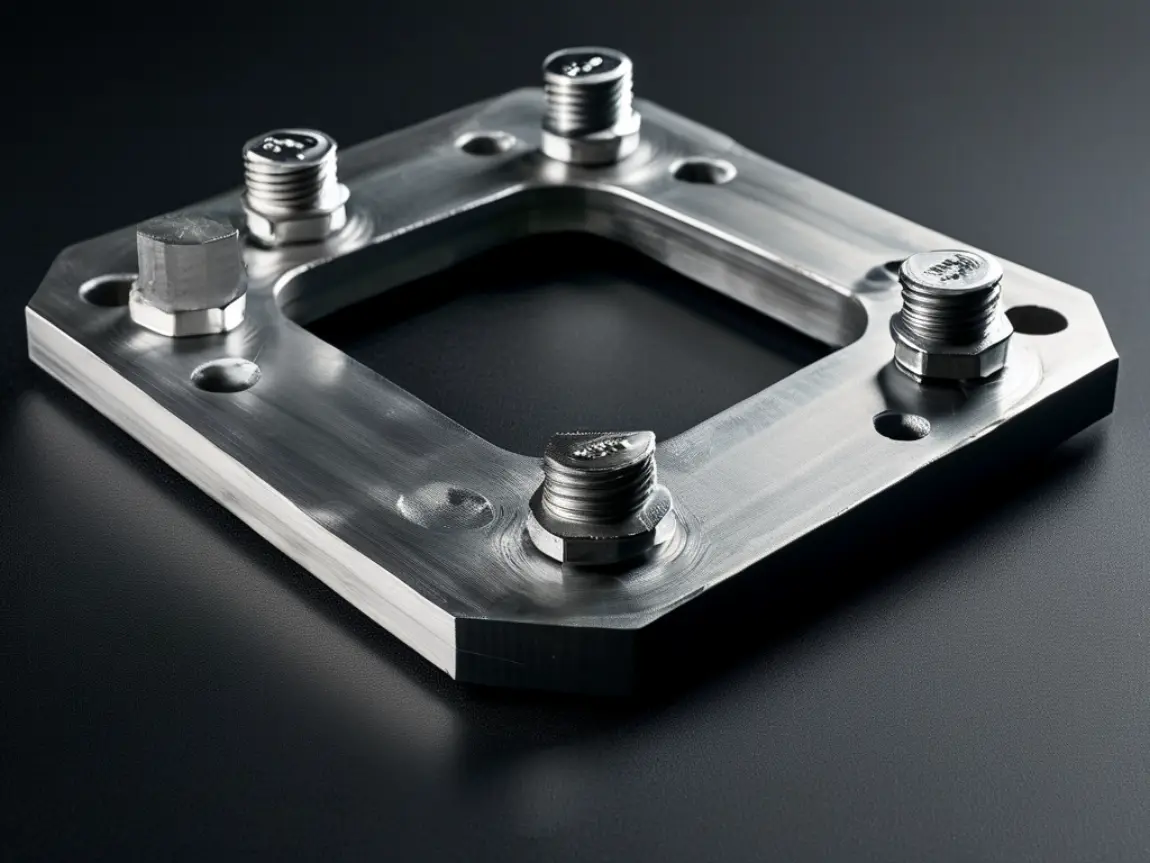
Anchor Types: Studs, Rebar & Channels
The anchor is what transfers load into the concrete. The three most common options:
- Headed studs — the standard choice. Welded to the back face, the head resists pull-out. Diameter and length are sized to the design load.
- Deformed bar anchors (DBA) — reinforcing bar welded to the plate, used where deeper embedment or higher capacity is needed.
- Cast-in channels — a slotted channel cast flush, allowing bolted connections to be adjusted along the slot after casting.
Studs and DBA are welded in a jig for consistent placement — a job that pairs naturally with laser-cut plates, since the hole and edge positions are already accurate to ±0.1 mm.
Plate Specification
The plate itself is defined by four parameters:
| Parameter | Typical range |
|---|---|
| Plate thickness | 8 – 20 mm (heavier for high-load connections) |
| Plate size | 150 × 150 mm to 500 × 500 mm |
| Steel grade | ASTM A36, Q235B, S275JR |
| Stud size | 13 – 22 mm diameter, 100 – 200 mm long |
Carbon steel is standard because anchor plates are structural and site-welded. Zemlaser laser-cuts carbon steel plate up to 80 mm, so even heavy base-connection plates are within capacity — see our manufacturing capabilities.
Coating and Corrosion Protection
Because anchor plates sit at the concrete surface, corrosion protection is often required:
- Bare steel — for fully encased, dry interior connections.
- Hot-dip galvanized — the standard for exterior and marine structures. Galvanizing protects both plate and studs.
- Stainless — for aggressive coastal or chemical environments.
Where the plate will be welded on site, keep the weld zone bare — galvanizing must be removed before welding. Many plates ship galvanized with a masked bare weld area.
How to Supply Cast-In Anchor Plates
A clear drawing package gets an accurate quote fast:
- Plate drawing — size, thickness, grade, and any holes or slots.
- Anchor detail — stud or DBA diameter, length, count, and layout.
- Coating — bare, galvanized, or stainless, with weld-zone masking if needed.
- Quantity and schedule — a trial batch or full production.
Zemlaser fabricates finished cast-in anchor plates factory-direct — laser-cut, studs jig-welded, galvanized, and inspected — with a 1-piece minimum and quotes within 24 hours. Explore the full range of steel grades we cut, or send drawings for a free quote.
Frequently Asked Questions
What is a cast-in anchor plate?
A cast-in anchor plate is a steel plate with welded anchors (studs or rebar) cast into concrete so steelwork, cladding, or equipment can be bolted or welded to it. The exposed face stays flush with the concrete surface.
What anchors are used on cast-in plates?
Headed studs are standard, welded to the back face to resist pull-out. Deformed bar anchors (DBA) are used for higher capacity, and cast-in channels allow adjustable bolted connections. Studs and DBA are jig-welded for consistent placement.
What steel grade and thickness for anchor plates?
Carbon steel grades ASTM A36, Q235B, or S275JR in 8-20mm thickness are typical. Heavier connections use thicker plate. Zemlaser cuts carbon steel up to 80mm, so high-load plates are within capacity.
Should cast-in anchor plates be galvanized?
Galvanize for exterior or marine exposure to protect plate and studs. Keep the weld zone bare where site welding occurs. Many plates ship galvanized with a masked bare weld area.
Can I get anchor plates with studs already welded?
Yes. Zemlaser laser-cuts the plate, jig-welds the studs or DBA to your drawing, and galvanizes if required — delivering a finished, ready-to-install anchor plate.
Need Cast-In Anchor Plates?
Send your drawings for a factory-direct quote — laser-cut plates, jig-welded studs, galvanizing, 1-piece minimum, shipped FOB Tianjin.
Get a Free Quote →