Not all precast concrete moulds are alike. A wall panel mould, a beam mould, and a stair mould each present different fabrication challenges — draft angles, side release, complex geometry, and reinforcement clearances all change how the steel is cut, bent, and welded. This guide walks through steel moulds for precast beams, stairs, and panels and what makes each one different to fabricate.
Wall Panel Moulds
Flat wall panel moulds are the most common and the simplest to build: a flat steel casting bed with fixed or hinged side rails. Key fabrication points:
- Flatness is critical — the casting bed defines the panel face. Laser-cut and CNC-formed steel holds the tolerance.
- Side rails may be fixed, bolted, or magnetic for repositioning on a casting table.
- Block-outs for windows, doors, and services are added as removable steel inserts.
Hollow-core and sandwich panels add complexity with internal void formers or insulation retention, but the base mould principle is the same.
Beam and Column Moulds
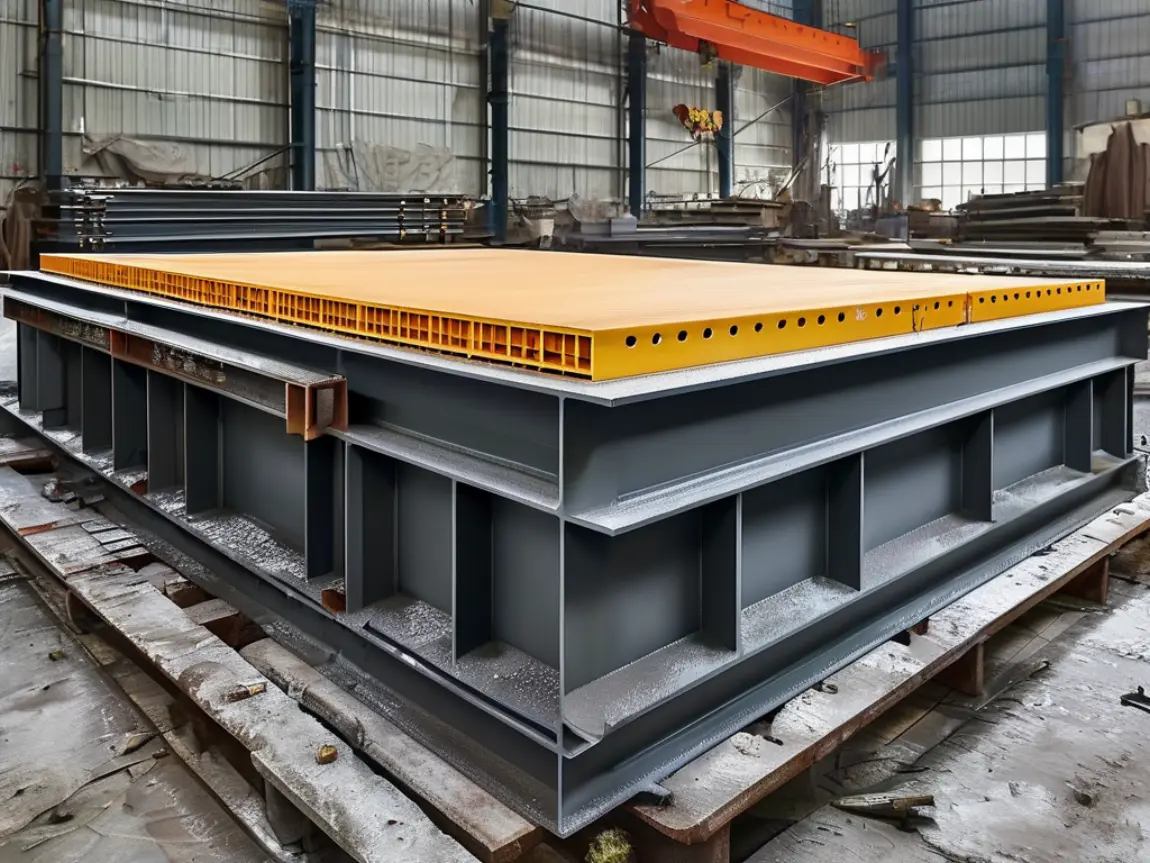
Beam and column moulds are three-dimensional and carry higher casting pressure, so they need heavier plate and more stiffening:
- Draft angles on the side walls let the cured beam release cleanly. Even 1–2° matters.
- Side release — hinged or hydraulic side walls speed demoulding on high-volume lines.
- End plates are drilled or slotted for post-tensioning strands or reinforcement.
- Stiffener ribs resist the outward pressure of vibrated concrete on tall side walls.
These moulds are typically built in 8–16 mm plate. Zemlaser cuts carbon steel up to 80 mm, so even the heaviest beam moulds and their end plates are within capacity — see our fabrication capabilities.
Stair Moulds
Precast stair moulds are the most geometrically complex. Each tread and riser is a precise surface, and the whole assembly must release a heavy, awkwardly shaped unit:
- Stepped geometry requires accurate cutting and welding of every tread and riser plate.
- Draft and release — stairs are heavy and interlock with the mould, so demoulding strategy drives the design.
- Nosing and finish details are formed into the steel for a consistent architectural edge.
- Landing integration for stair-and-landing units adds further complexity.
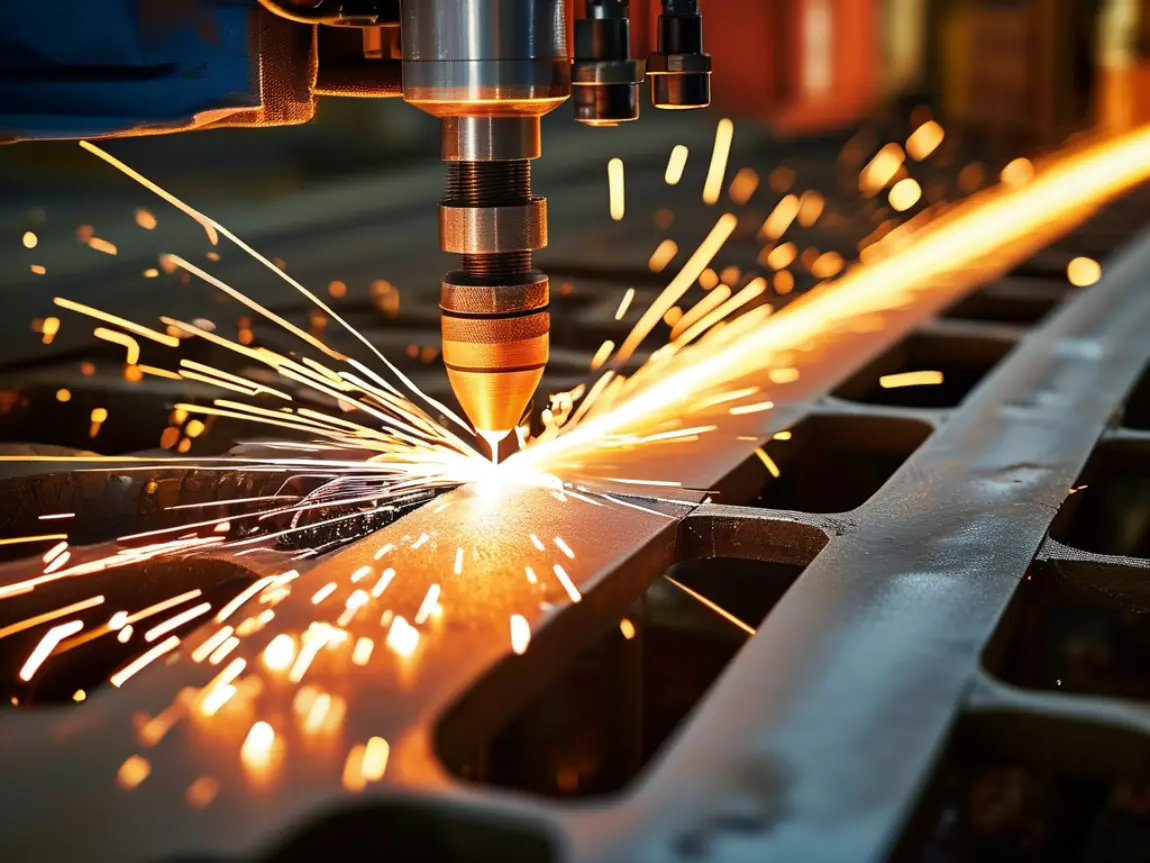
Accurate laser cutting is what makes a repeatable stair mould possible — every step plate matches the drawing to ±0.1 mm, so treads and risers align pour after pour.
Common Fabrication Factors
Whatever the product, every precast mould shares these considerations:
| Factor | Why it matters |
|---|---|
| Plate thickness | Resists casting pressure and warping over cycles |
| Steel grade | Q235B standard, Q355B for high-cycle moulds |
| Draft angles | Allow clean release of the cured unit |
| Stiffening | Prevents deflection under vibration |
| Casting-face finish | Shot-blast or ground for architectural work |
| Cycle life target | Drives plate weight and weld quality |
For a full breakdown of what to specify, see our guide to custom steel molds for precast concrete, or the cost factors when sourcing from China.
Sourcing Complex Moulds from China
Complex beam and stair moulds reward a fabricator with strong cutting capacity and welding quality. Zemlaser has fabricated steel since 2003, runs 10+ fiber lasers, and is ISO 9001 certified. Send GA and detail drawings — including draft angles, release method, and cycle target — for a factory-direct quote within 24 hours. Explore the steel grades we cut or request a quote.
Frequently Asked Questions
What steel moulds can you make for precast concrete?
Zemlaser fabricates steel moulds for precast wall panels, beams, columns, stairs, and landings. Each is laser-cut, press-brake formed, and welded to your GA drawings, with draft angles and release systems as specified. 1-piece minimum, ISO 9001 certified.
What makes a stair mould harder to fabricate than a panel mould?
Stair moulds have stepped geometry where every tread and riser is a precise surface, plus a demoulding challenge because stairs are heavy and interlock with the mould. Panel moulds are essentially flat casting beds, which are far simpler to build.
Why do beam moulds need draft angles?
Draft angles — a slight taper on the side walls — let the cured beam release cleanly from the mould without damage. Even 1-2 degrees makes demoulding reliable and extends mould life over many cycles.
How thick is the steel for a precast beam mould?
Beam and column moulds are typically 8-16mm plate with stiffener ribs to resist casting pressure. High-volume or heavy moulds use thicker plate. Zemlaser cuts carbon steel up to 80mm, covering the heaviest mould components.
Can one factory build panel, beam, and stair moulds together?
Yes. Zemlaser fabricates the full range of precast moulds plus embed plates and structural steel. Sourcing a complete mould package from one factory simplifies logistics and keeps tolerances consistent across the set.
Get a Quote for Your Precast Moulds
Send GA drawings for panel, beam, column, or stair moulds — laser-cut, welded, and finished factory-direct from China, shipped FOB Tianjin.
Get a Free Quote →