Quick answer: Laser cut metal screens are flat steel or stainless panels whose decorative pattern is burned directly through the sheet by a fiber laser — no tooling, any geometry, 0.2–0.4 mm kerf. For outdoor architectural use, choose 304 stainless inland and 316 within 5 km of the coast, keep every cutout at least as wide as the sheet is thick, and hold open area under roughly 60% so the panel keeps its stiffness.
That one paragraph covers 80% of the decisions. The rest of this guide covers the other 20% — the pattern engineering, material grades, mounting systems, and sourcing details that separate a screen that looks good on day one from one that oil-cans, rusts, or arrives bent. At Zemlaser we cut decorative screens weekly on 10+ fiber lasers, from 1.5 mm feature panels to 10 mm structural sun screens, so everything below reflects what we actually run on the floor, not catalog theory.

What Counts as a Laser Cut Metal Screen
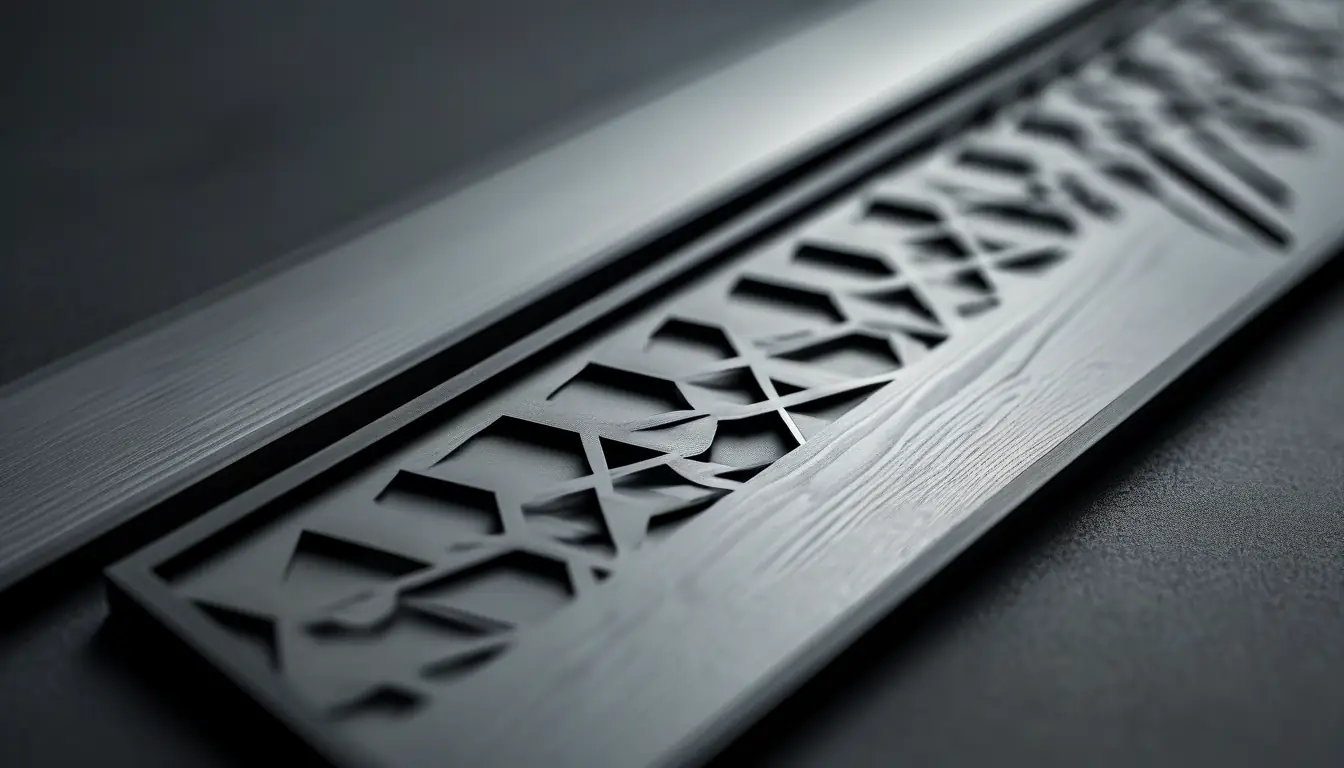
A laser cut screen is a single sheet — typically 1.5 to 10 mm thick — in which a CNC fiber laser cuts a repeating or one-off pattern all the way through. The same category goes by many names in RFQs: decorative metal screens, perforated facade panels, laser cut privacy screens, sun screens, mashrabiya panels, balustrade infill panels. What distinguishes laser cutting from punched perforated metal is geometry freedom: punched panels are limited to round or square holes on a fixed pitch, while laser cut panels can carry organic motifs, logos, calligraphy, or gradient patterns at any rotation [3].
Typical architectural applications we produce:
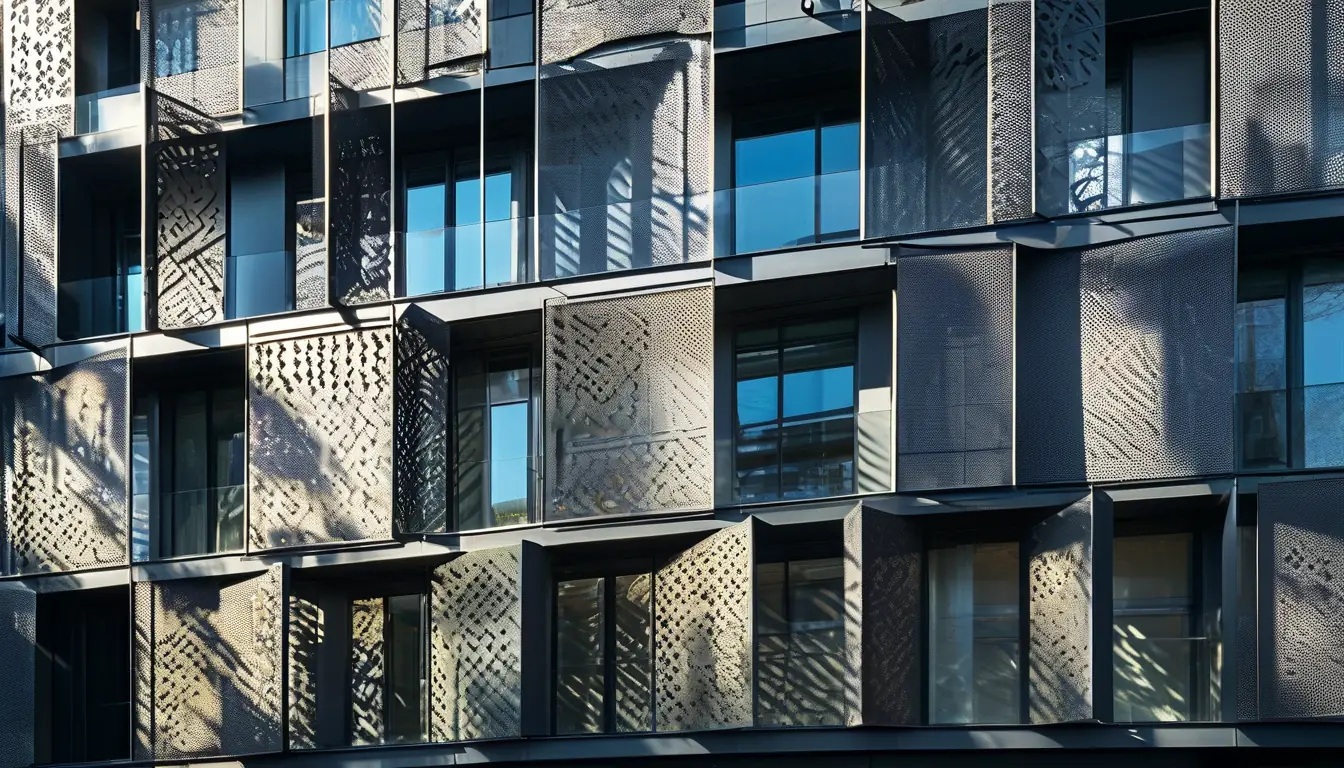
- Facade cladding and sun screens — mounted on standoffs in front of glazing to cut solar gain while keeping views out-to-in asymmetric.
- Privacy and balustrade infill — balconies, stairwells, terrace dividers.
- Interior partitions and ceiling features — usually thinner gauge (1.5–3 mm) with finer detail.
- Gate and fence panels — heavier gauge (4–8 mm) because they take impact and wind load at the edge.
- Equipment enclosures and ventilation panels — where open area is calculated for airflow first, looks second.
If your project needs thousands of identical small holes at tight cost, punching may beat laser — we cover that decision in detail in our cutting process comparison. If your pattern is custom, graduated, or non-round, laser is the only realistic option.
Pattern Engineering: The Rules That Keep Your Screen Flat and Strong
This is where most first-time buyers lose money. A pattern that renders beautifully in CAD can come off the laser table warped, fragile, or with dross hanging in every small feature. Three rules govern everything:
Rule 1 — Minimum feature size ≥ sheet thickness
Piercing a hole narrower than the sheet is thick traps heat and ejecta, burns the edges, and can damage the nozzle. As a shop rule we hold every hole, slot, or negative space at ≥ 1.0× the sheet thickness, and prefer ≥ 1.5×. In 3 mm sheet, that means nothing narrower than 3 mm; in practice we recommend 4.5 mm or more for a clean edge.
Rule 2 — Bridges between cutouts ≥ 1.5× thickness or 3 mm, whichever is larger
The metal left between adjacent cutouts is what carries the panel. Thin bridges warp during cutting because heat concentrates there, and they bend in service. For a 2 mm decorative panel, keep bridges ≥ 3 mm; for an 8 mm structural sun screen, keep them ≥ 12 mm.
Rule 3 — Open area under ~60% for freestanding panels
Open area is the percentage of the panel that is hole. Above roughly 60%, the panel loses effective stiffness fast and needs a support frame or thicker gauge. Screens used as non-structural cladding over a backing can run higher. If you need an airflow number, tell us the required free area and we engineer the pattern to hit it.
| Pattern type | Recommended sheet thickness | Min. feature | Typical open area | Best application |
|---|---|---|---|---|
| Fine geometric / lace | 1.5–3 mm | ≥ 2 mm | 30–50% | Interior partitions, ceilings |
| Organic / botanical motifs | 3–5 mm | ≥ 4 mm | 30–55% | Facades, privacy screens |
| Large-format slats & bars | 4–8 mm | ≥ 6 mm | 40–60% | Sun screens, gates |
| Gradient / parametric perforation | 2–5 mm | ≥ 1× t | varies by zone | Feature facades, branding walls |
| Structural infill (impact zone) | 6–10 mm | ≥ 8 mm | ≤ 45% | Balustrades, industrial guards |
Send us your pattern as DXF or STEP — our file format guide explains which one to export from your CAD tool and how to keep curves clean for the cutter.
Material Selection: Grade, Finish, and Where the Panel Lives
Environment decides the grade. The failure mode to design against is not uniform rust — it is pitting and crevice corrosion at cut edges, where the laser has left a thin heat-affected zone with no coating adhesion. Choosing by exposure class:
| Exposure | Recommended material | Standard reference | Notes |
|---|---|---|---|
| Interior, dry | Carbon steel (S235/Q235) + powder coat | — | Cheapest route; any RAL color |
| Outdoor inland, painted | Carbon steel + primer + powder coat | Coating per AAMA 2604/2605 practice [4] | Edges must be sealed by coating; no bare cut lines |
| Outdoor inland, metallic look | Stainless 304 (S30400) | ASTM A240/A240M [1] | Brushed or PVD finishes hold up well |
| Coastal (< 5 km from sea) or de-icing salt | Stainless 316 (S31600) | ASTM A240/A240M [1]; marine guidance per Nickel Institute [2] | Molybdenum resists chloride pitting at cut edges |
| Rust-look architectural, no paint | Weathering steel (Corten-type) | ASTM A606/A606M [5] | Stabilizes to a dense patina; expect initial runoff staining below the panel |
Two notes from production experience. First, for coated carbon steel screens the cut edges are the weak point — we deburr and edge-round every panel before coating so the powder film does not bridge a sharp burr and crack later. Second, 316 costs roughly 25–40% more than 304 at time of writing; specifying 316 for an inland mall facade is money left on the table, and specifying 304 for a beachfront hotel is a warranty claim waiting to happen. Coastal exposure guidance from the Nickel Institute is blunt: chloride-bearing atmospheres demand the higher-alloy option or you accept surface rust [2].
Available surface finishes for stainless screens:
- No. 2B / No. 4 brushed — standard mill or brushed finish, low glare.
- PVD colors — bronze, black, gold, rose gold; thin ceramic coating, excellent exterior durability on 304/316.
- Powder coat over stainless — possible but usually unnecessary; choose carbon steel if you want paint.
- Mirror 8K — interior feature work only; scratches show.
Mounting Systems: How the Screen Actually Hangs
The pattern gets the attention, but the mounting detail decides whether the facade looks crisp or wavy. Three systems cover nearly every project:
Direct fixing
Panel screws or rivets straight to the substrate or a sub-frame through pre-cut fixing holes or slots. Cheapest, fastest, but every fastener head is visible — use it for gates, fences, and screens where the fixing pattern is part of the design language. We laser-cut fixing holes to match your anchor positions, typically slotted ±2 mm horizontally to absorb thermal movement.
Standoff (floating) system
The panel hangs on stainless standoffs 20–150 mm off the wall, creating a shadow gap that makes the pattern read as a floating layer. This is the default for feature facades. Design notes: standoffs on a grid of 600–900 mm, slotted holes in the panel for vertical adjustment, and never mix 304 standoffs with a carbon steel panel without isolation — galvanic contact plus rain equals staining.
Frame cassette system
The screen is welded or mechanically fixed into a perimeter frame, and frames clip onto a carrier rail. Best for large facades and high-wind zones because each cassette is independently engineered and replaceable. Panels over ~2 m² or in exposed locations almost always need a frame — a flat sheet that size will oil-can (show visible waviness) in sunlight unless stiffened.
Whichever system you choose, send the wind zone and panel size with your RFQ. We will check gauge and fixing spacing against your project rather than quoting a generic panel.
Flatness, Edge Quality, and What “Good” Looks Like
Two quality parameters you should hold your supplier to:
- Edge quality. Thermal cut quality is classified by ISO 9013, which grades perpendicularity, surface roughness, and dimensional tolerance into quality ranges [6]. For visible architectural screens we cut to ISO 9013 quality range 2 or better on steel up to 10 mm; ask your supplier which range they commit to in writing.
- Flatness. Laser heat input curls thin, heavily cut panels. We control it with cutting-sequence strategy (distributed piercing, last cuts at the edges) and stress-relief layout rules. Acceptable delivered flatness for facade panels is typically ≤ 3 mm per 2 m before mounting; standoff systems absorb more than direct fixing.
Dross (re-solidified metal hanging under the cut edge) is unacceptable on a decorative screen — every panel should come deburred with clean, touch-safe edges. If you have ever unrolled a shipment with sharp slag on every hole, you know why this belongs in the purchase order, not in the inspection report.
Sourcing Laser Cut Screens from China: MOQ, Lead Time, Packing
What to expect when ordering laser cut screens from a Chinese factory:
- MOQ: effectively 1 piece for laser work — no tooling means no minimum economics. Real MOQ drivers are freight, not production.
- Lead time: cutting and finishing typically 7–15 working days depending on finish; sea freight to Europe/NA adds 25–40 days. Plan 6–8 weeks door-to-door for coated or PVD panels.
- Quote inputs: DXF/STEP file, material and thickness, finish, quantity, panel size, and the mounting concept. Missing any of these and you will get a budget number, not a firm one.
- Packing: panels must ship vertically in wooden crates with foam separators between every piece — flat-stacked large panels arrive scratched or bent. Ask for photos of the crating before shipment, not after.
- Sample: for facades, order one full-size sample panel first. Color and pattern scale never read the same on a screen as they do on the building.
Zemlaser ships screens with per-panel protective film, foam-separated vertical crating, and a packing list keyed to your facade zone so site crews can install in sequence. Send drawings via our quote page and you will get a firm quotation with packing method inside 24 hours.
Frequently Asked Questions
What thickness is best for an outdoor laser cut privacy screen?
3–5 mm for panels up to about 2 m tall in 304 or 316 stainless, or powder-coated carbon steel. Above 2 m or in high wind, move to 5–8 mm or add a perimeter frame.
Can you cut our logo or a custom pattern?
Yes. Any vector geometry works — logos, calligraphy, parametric gradients. Send AI/DXF vector files; bitmap images need vectorizing first, which we can do for approval before cutting.
Is laser cutting cheaper than punching for screens?
For custom patterns and small-to-medium quantities, yes — laser has zero tooling cost. For long runs of simple round holes at standard pitch, punching wins on per-piece cost.
Will a carbon steel screen rust outdoors?
Not if it is properly prepared: deburred, edge-rounded, primed, and powder coated with all cut edges sealed. Raw carbon steel outdoors will show flash rust within weeks.
What is the largest panel you can cut?
Our large-bed fiber lasers handle sheets up to 6,000 × 2,500 mm in a single piece, and thicker-gauge structural screens on our heavy plate beds. Container dimensions usually govern the practical maximum — anything over about 11.8 m cannot ship in a standard box.
References
- ASTM International. “A240/A240M-24: Standard Specification for Chromium and Chromium-Nickel Stainless Steel Plate, Sheet, and Strip.” ASTM, 2024. https://www.astm.org/a0240_a0240m-24.html (accessed August 9, 2026).
- Nickel Institute. “Guidelines for Nickel Stainless Steels for Marine Environments, Natural Waters and Brines (Publication 11003).” Nickel Institute. https://nickelinstitute.org/en/resources/technical-guides/guidelines-for-nickel-stainless-steels-for-marine-environments-natural-waters-and-brines-11003/ (accessed August 9, 2026).
- The Mesh Company. “Punching vs. Laser Cutting: An In-Depth Analysis of Metal Fabrication Techniques.” The Mesh Company. https://themeshcompany.com/punching-vs-laser-cutting-an-in-depth-analysis-of-metal-fabrication-techniques/ (accessed August 9, 2026).
- FGIA (formerly AAMA). “AAMA 2605-22: Voluntary Specification, Performance Requirements and Test Procedures for Superior Performing Organic Coatings on Aluminum Extrusions and Panels.” FGIA, 2022. https://store.fgiaonline.org/AAMA-2605-22/ (accessed August 9, 2026).
- ASTM International. “A606/A606M-23: Standard Specification for Steel, Sheet and Strip, High-Strength, Low-Alloy, Hot-Rolled and Cold-Rolled, with Improved Atmospheric Corrosion Resistance.” ASTM, 2023. https://www.astm.org/a0606_a0606m-23.html (accessed August 9, 2026).
- ISO. “ISO 9013:2017: Thermal cutting — Geometrical product specification and quality tolerances.” International Organization for Standardization, 2017. https://www.iso.org/standard/60321.html (accessed August 9, 2026).