TL;DR: Cutting speed falls steeply with thickness: a 6 kW fiber laser runs 30–40 m/min on 1 mm mild steel but only 3–4 m/min at 10 mm and around 1 m/min at 20 mm. Stainless needs nitrogen and runs 20–40% slower than mild at equal thickness. The charts below give dependable starting parameters by power class — gas, focus, and speed — verified against our own production runs, then explain how to tune them for your machine.
1. Why Speed Drops So Fast With Thickness
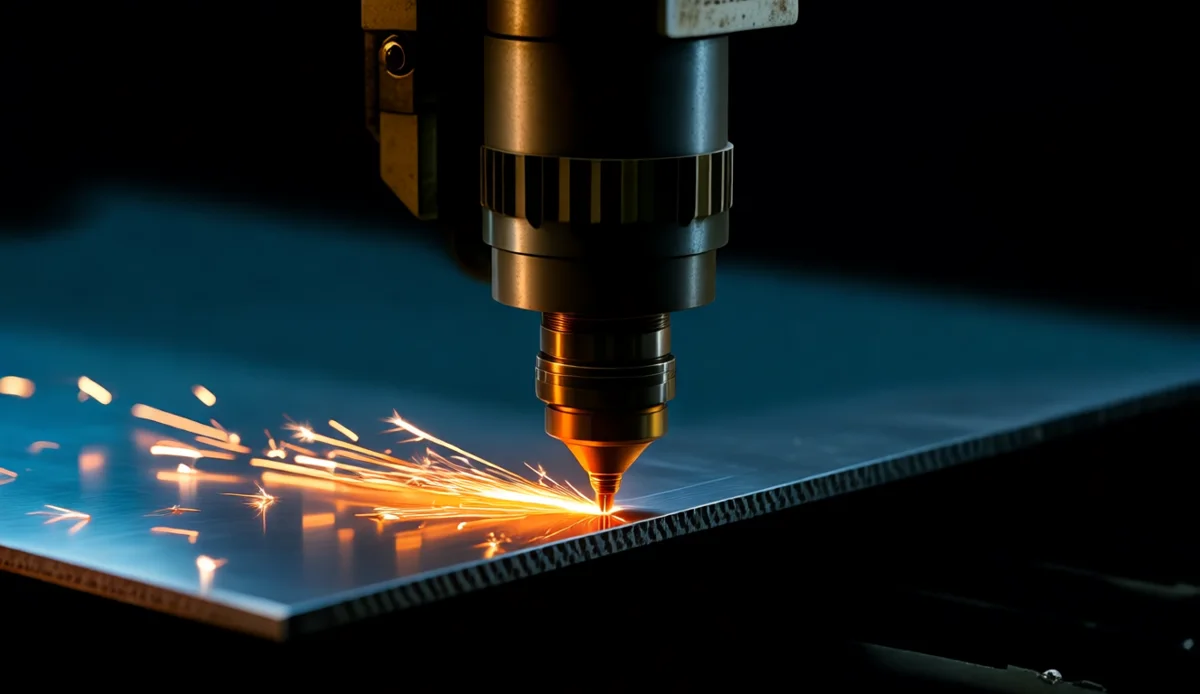
Laser cutting is an energy balance: the beam must melt (or burn, with oxygen) the full thickness and the assist gas must eject the melt downward. As thickness rises, three things work against you — the kerf walls absorb more beam before it reaches the bottom, the melt column gets longer and harder to eject, and heat conduction into the plate steals energy sideways. The result is the steep, nonlinear speed curve every operator knows: halving the thickness more than doubles the speed.
That nonlinearity is exactly why quoting and scheduling must be thickness-aware. Our cost per meter guide shows how it translates into price bands.
2. Mild Steel (O₂ Assist): Speed by Thickness and Power
Oxygen assist adds exothermic heat, which is why mild steel cuts faster than stainless at equal thickness. Typical production speeds:
| Thickness | 3 kW | 6 kW | 12 kW |
|---|---|---|---|
| 1 mm | 20–25 m/min | 30–40 m/min | 40–55 m/min |
| 3 mm | 8–12 m/min | 14–20 m/min | 22–30 m/min |
| 6 mm | 3–4.5 m/min | 6–9 m/min | 10–14 m/min |
| 10 mm | 1–1.5 m/min | 2.5–4 m/min | 5–7 m/min |
| 16 mm | — | 0.8–1.3 m/min | 2–3 m/min |
| 20 mm | — | — | 0.8–1.2 m/min |
Bright-edge cutting with air or oxygen-nitrogen mixes pushes thin-sheet speeds higher, but for structural work oxygen remains the dependable default.
3. Stainless Steel (N₂ Assist): Speed by Thickness and Power
Nitrogen melts-and-blows without oxidation, leaving a clean, weld-ready edge — at the price of speed and gas volume:
| Thickness | 3 kW | 6 kW | 12 kW |
|---|---|---|---|
| 1 mm | 15–22 m/min | 25–35 m/min | 35–50 m/min |
| 3 mm | 5–8 m/min | 10–14 m/min | 16–24 m/min |
| 6 mm | 1.5–2.5 m/min | 4–6 m/min | 7–10 m/min |
| 10 mm | — | 1.2–2 m/min | 3–4.5 m/min |
| 16 mm | — | — | 0.9–1.5 m/min |
Gas consumption is the hidden cost line: 10 mm stainless at high pressure (16–20 bar) can consume nitrogen fast enough that the gas bill equals the machine time. Bulk liquid nitrogen tanks change the economics versus cylinder racks — factor this when comparing quotes, as our cost guide details.
4. Starting Parameter Table (6 kW Class)
For a 6 kW fiber with a 100–150 µm fiber core, these starting points will get you cutting within a few test tiles. Focus position is relative to plate top surface (negative = into the plate):
| Material / thickness | Gas | Pressure | Focus | Speed start |
|---|---|---|---|---|
| Mild 3 mm | O₂ | 0.5–0.8 bar | −1.5 mm | 16 m/min |
| Mild 6 mm | O₂ | 0.6–0.9 bar | −2.5 mm | 7 m/min |
| Mild 10 mm | O₂ | 0.7–1.0 bar | −4 mm | 3 m/min |
| SS304 2 mm | N₂ | 10–12 bar | −1 mm | 18 m/min |
| SS304 6 mm | N₂ | 14–16 bar | −2.5 mm | 5 m/min |
| Alu 3 mm | N₂ / air | 12–14 bar | −1 mm | 12 m/min |
Readers coming for the full process picture should pair this with our breakdown of where laser fits versus plasma and waterjet.
5. How to Tune From the Starting Point
Machine models, lens health, and plate chemistry all shift the optimum. Tune one variable at a time, in this order:
- Pierce first. If pierces blow material upward or take >2 s on thin sheet, add pierce delay or drop pierce power.
- Then speed. Raise speed 10% until dross appears on the underside, then back off 10%.
- Then focus. Striations drifting backward = focus too high; rough top edge with spark blowback = focus too deep.
- Then pressure. Dross that won’t clear on stainless = more pressure or slower speed; turbulent noisy cut on oxygen = pressure too high.
Cut a stepped test coupon (five speeds on one strip) rather than trusting simulation alone — ten minutes of test metal saves hours of rework. For the geometry-side rules — kerf compensation and what the drawings should carry — our file format guide is the companion piece.
6. Striation Quality: Reading the Edge
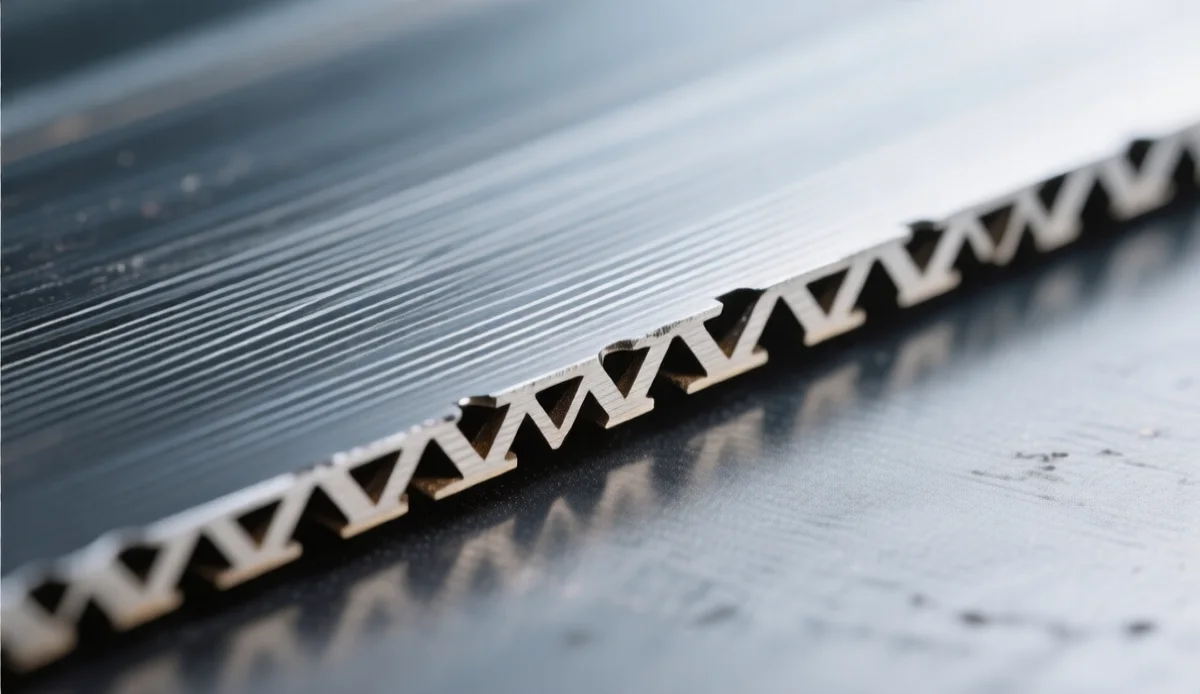
Parallel striations on the cut face are normal; what matters is their angle and depth. Nearly vertical, fine striations mean the parameters sit in the window. Backward-leaning coarse striations signal speed too high for the power; a wavy edge with heavy bottom dross signals speed too low or focus wrong. On oxygen cuts a light oxide layer is expected; on nitrogen cuts any yellow/brown tint means air contamination or insufficient pressure — and that tint will telegraph through powder coat later, so reject it at the machine, not at painting.
FAQ
What speed does a 6 kW fiber laser cut 6 mm mild steel?
Roughly 6–9 m/min with oxygen assist in production conditions. Simulation sheets may show higher; schedule with the conservative number.
Why is stainless slower to laser cut than mild steel?
Mild steel with oxygen gets extra heat from the exothermic reaction; stainless with nitrogen relies on beam energy alone to melt and eject, so speeds run 20–40% lower at equal thickness.
How much nitrogen does laser cutting stainless consume?
It scales with pressure, nozzle size, and cut time — 6 mm stainless at 14–16 bar can consume several cubic meters per hour of cutting. Bulk liquid supply is standard for shops cutting stainless daily.
What focus position should I use for thick plate?
Deeper into the plate as thickness rises: roughly −2.5 mm at 6 mm mild, −4 mm at 10 mm. Start there and adjust by edge quality, not by formula.
Do cutting parameters differ between machine brands?
Yes — beam delivery, head design, and software compensation all differ. Use brand parameter libraries as starting points, then validate with test coupons on your own material batches.
Need parts cut on calibrated parameters? Upload your DXF through our quote form — we quote thickness-aware, so 3 mm parts are not priced like 10 mm parts.
References
- Zemlaser. Production parameter logs, 6 kW fiber line, accessed Aug 29, 2026.(第一手工艺数据,本网站)
- Zemlaser. “Laser Cutting Cost Per Meter: 2026 Pricing Guide.” zemlaser.com, 2026.(本站指南,正文已内链)
- Zemlaser. “How Thick Can a Fiber Laser Really Cut?” zemlaser.com, 2026.(本站指南)