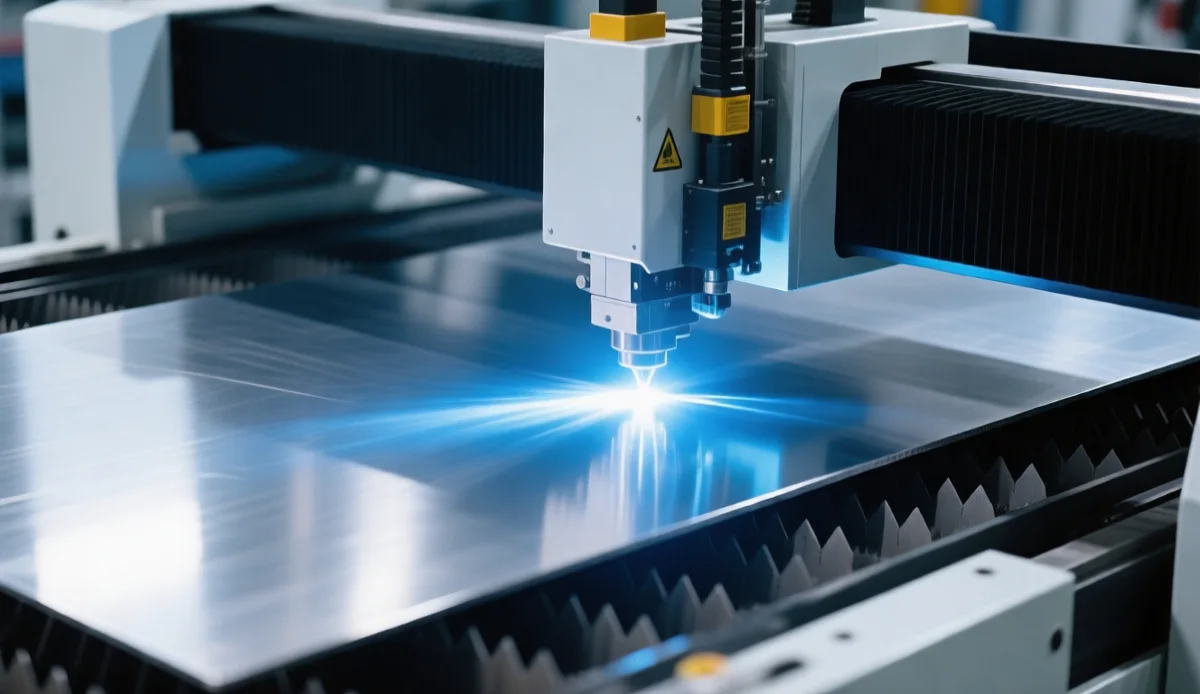
TL;DR: Stainless steel laser cutting is a nitrogen game: the beam melts, high-pressure N₂ ejects the melt, and the result is an oxidation-free edge ready for welding or polishing — at roughly 1.5–2× the per-meter cost of mild steel. The three failure modes to control are nitrogen contamination (tinted edges), bottom dross on 8 mm+, and heat warp on thin sheet. Get gas purity, focal position, and nesting right and stainless is the most profitable material class a fiber laser runs.
1. Why Stainless Behaves Differently Under the Beam
Mild steel cutting borrows heat from the oxygen reaction; stainless refuses it. Chromium oxide skins resist burning, so stainless is cut inert — pure melt-and-eject with nitrogen. Three consequences follow directly:
- Slower speeds — all the energy comes from the beam; expect 20–40% below mild steel at equal thickness (our thickness and speed charts give the numbers by power class)
- Higher gas bills — nitrogen at 10–20 bar is consumed continuously while cutting
- Clean edges — no oxide layer, so welds, bends, and polish finishes start from bare metal
2. Gas Setup: Purity, Pressure, and the Failure Modes
Nitrogen quality decides edge quality. The working envelope:
| Thickness | Typical N₂ pressure | Purity requirement | Dominant failure if wrong |
|---|---|---|---|
| 1–3 mm | 10–14 bar | ≥99.95% | Edge tint from air ingress |
| 4–8 mm | 14–18 bar | ≥99.95% | Dross refreezing in kerf |
| 10–16 mm | 16–20 bar | ≥99.99% preferred | Mid-cut stalls, rough faces |
Edge tint (straw/yellow/brown discoloration) is the classic defect: air contamination, worn nozzles, or insufficient pressure. It matters beyond looks — tinted oxide migrates into welds and telegraphs through brushed or PVD finishes. Bottom dross on 8 mm+ usually means speed/pressure mismatch; recheck before slowing down blindly. For structural grades where appearance is irrelevant, some shops cut 304 with compressed air to save gas — acceptable for hidden parts, never for architectural or food-grade surfaces.
3. Stainless Grades We Cut Daily, and Their Quirks
| Grade | Typical products | Cutting notes |
|---|---|---|
| 304 / 304L | Architectural panels, tanks, food equipment | The baseline; cuts cleanly from 0.5–16 mm |
| 316L | Marine, chemical, pharma contact parts | Slightly stickier melt; drop speed ~5–10% vs 304 |
| 430 (ferritic) | Appliance trim, decorative | Cuts fast; watch edge burr on thin gauge |
| 2205 duplex | Offshore, pressure applications | Slower; higher heat input risk at edges — keep speeds honest |
Material condition matters as much as grade: film-laminated sheet needs the film cut through cleanly (old film melts into the kerf), and warped plate from slitting lines will crash heads if the capacitive height control is lazy. We reject badly bowed plate at intake rather than fighting it on the bed.
4. Edge Quality Standards Buyers Should Specify
“Clean edge” means nothing on a purchase order. Specify instead:
- ISO 9013 quality range — range 2 for weld-critical edges, range 3 acceptable for structural (see our tolerance guide for how the standard maps to practice)
- Dross-free — no reattached metal at the bottom edge, verifiable by touch and by welding
- Tint limits — for polished or coated parts, state “no visible oxide tint”
One nuance for food and pharma buyers: the cut edge itself is not the hygiene surface — passivated, polished faces are. But dross and heavy striation trap contamination during fabrication, so edge quality still gates supplier selection. Our laser vs punching comparison covers the same hygiene logic for hole patterns.
5. Cost Structure: Where the Money Goes
Stainless quotes look scary until you split them apart. For a typical 3–6 mm job:
| Cost block | Share of quote | What moves it |
|---|---|---|
| Material | 55–70% | Nickel price, gauge, surface finish (2B vs brushed vs mirror) |
| Cutting time | 15–25% | Total cut length, thickness, hole count |
| Nitrogen | 5–12% | Pressure × cut time; bulk liquid supply halves this |
| Handling/packing | 5–10% | Film, interleaving paper, pallet pattern |
Because material dominates, the strongest cost levers are design-side: tighter nesting, shared gauges across your part set, and accepting 2B finish where brushed is not functionally required. Per-meter rate comparisons across suppliers are only meaningful at matched thickness and finish — see the worked ranges in our cost per meter guide.
6. Warping and Thin Sheet: The Layout Problem
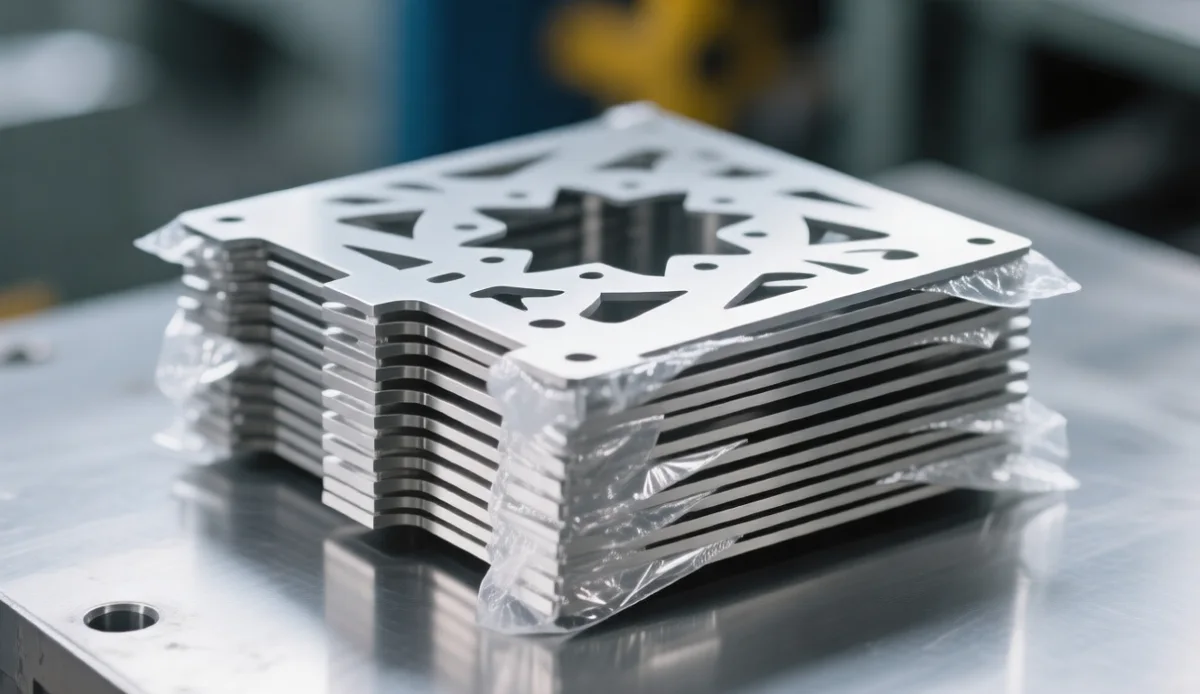
Below 1.5 mm, heat input per unit area gets high enough that part layout decides flatness. Three shop practices that hold parts flat:
- Cut small parts away from sheet edges — edge clamping is weakest at the border
- Leave micro-joints on parts under ~80 mm — they stay anchored until the sheet is stable, then get snapped or ground off
- Sequence from center outward — trapped heat migrates to already-cut skeleton, not to finished parts
If your parts routinely arrive banana-shaped, ask your supplier about their thin-sheet strategy before blaming the material.
FAQ
Why is laser cutting stainless steel more expensive than mild steel?
Nitrogen assist replaces the exothermic oxygen reaction, so speeds drop 20–40% and gas consumption adds cost. Expect roughly 1.5–2× the per-meter rate of mild steel at the same thickness.
What causes yellow or brown edges on laser cut stainless?
Oxide tint from air contamination — impure nitrogen, worn nozzles, or low pressure. It is a parameter fault, not a material property, and a competent shop re-cuts rather than ships it on polished work.
Can laser cut stainless edges be welded directly?
Yes — nitrogen-cut edges are oxide-free and weld-ready. Remove any protective film first, and specify dross-free so no reattached metal contaminates the joint.
Is compressed air acceptable for cutting stainless?
For hidden structural parts, some shops use it to save gas cost. For architectural, food, or pharma surfaces, insist on nitrogen — air leaves oxide contamination that shows through finishes.
What thickness of stainless can a fiber laser cut well?
0.5–16 mm is the comfortable production range on 6–12 kW machines; quality-focused work stays below 12 mm. See our thickness capability guide for power-by-power limits.
Stainless parts to price? Send drawings via our quote form — specify grade, finish, and edge standard, and the quote itemizes material, cutting, and gas so you can audit every line.
References
- ISO. “ISO 9013:2017 Thermal cutting — Classification of thermal cuts.” ISO, 2017. iso.org/obp (ISO 9013) (accessed Aug 29, 2026).
- Zemlaser. Production records, stainless nitrogen cutting line, accessed Aug 29, 2026.(第一手生产数据,本网站)
- Zemlaser. “Laser Cutting Cost Per Meter: 2026 Pricing Guide.” zemlaser.com, 2026.(本站指南,正文已内链)