TL;DR: The laser cutting gas does as much to your part as the beam does. Oxygen burns through thick mild steel fast but leaves a dark oxide edge; nitrogen blows a clean, oxide-free edge on stainless and aluminum but costs several times more in gas; dry compressed air is the budget option for thin sheet. The gas also decides whether the cut edge can be welded or coated directly — pick it from the finished part’s next step, not from habit.
1. What the Assist Gas Actually Does
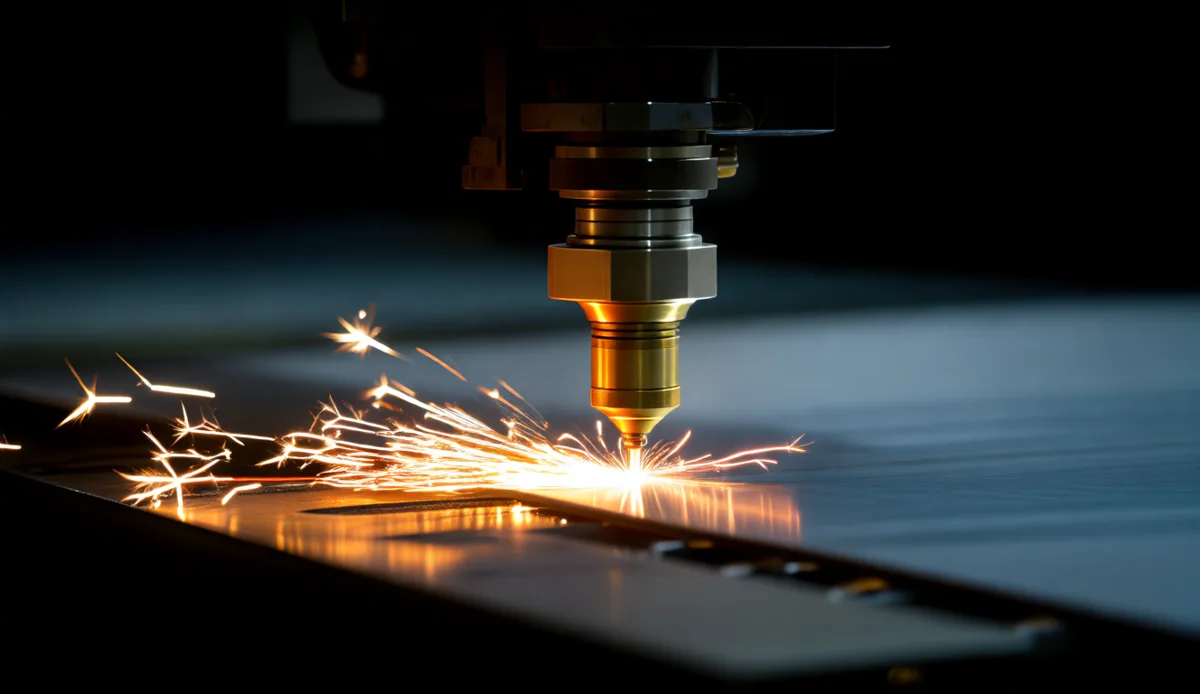
Every fiber laser cut happens inside a jet of gas. The nozzle delivers that jet coaxially with the beam, and it performs three jobs at once:
- Ejecting the melt. The beam only melts (or burns) the metal; the gas jet is what drives the molten material down through the kerf. Insufficient pressure or the wrong nozzle leaves melt stuck to the bottom as dross.
- Controlling the chemistry of the cut edge. This is the part buyers feel later. An inert gas leaves metallic, oxide-free edges; a reactive gas leaves an oxide layer that changes weldability, paint adhesion, and appearance.
- Adding or withholding heat. Oxygen doesn’t just blow — it reacts exothermically with hot steel, adding substantial heat to the cut. Nitrogen and air add none, so all cutting energy must come from the beam.
Because the gas touches all three, “which gas” is never a machine-setting detail. It sets cutting speed, edge quality, the post-processing the part needs, and a large share of the running cost. Our thickness and speed charts are gas-specific for exactly this reason.
2. Oxygen: The Workhorse for Thick Mild Steel
Oxygen cutting (O₂ assist) is a burning process. The laser heats the steel to ignition temperature, the oxygen jet then oxidizes it exothermically, and the reaction itself supplies a large part of the cutting energy. Consequences:
- Thick plate at modest laser power. The extra chemical energy lets a 6 kW machine cut 16–20 mm mild steel that would otherwise need far more beam power. Above about 6–8 mm mild steel, oxygen is usually the right answer.
- Low gas pressure and low gas cost. Oxygen cuts at roughly 0.3–2 bar — a small fraction of nitrogen pressures — so consumption and cost stay low.
- Slower than it looks on thin sheet. Below about 3 mm, oxygen’s heat input becomes a liability: wider heat-affected zone, more edge oxidation, slower than air or nitrogen on thin material.
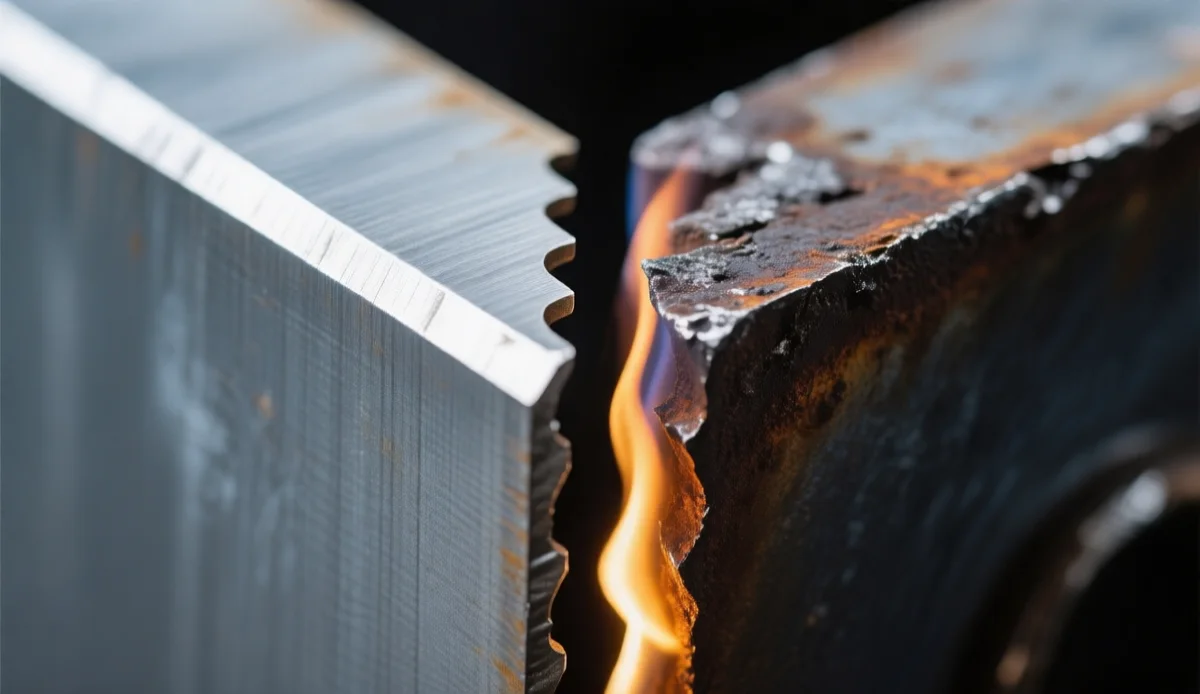
- A dark oxide edge. The cut face carries an iron oxide layer. It looks fine for structural work that gets painted, but it must be considered for welding and always for coating (Section 6).
Oxygen is effectively limited to carbon/mild steel. Using it on stainless or aluminum oxidizes the edge badly and defeats the reason those materials were chosen — for those, move to nitrogen or air.
3. Nitrogen: Clean Edges That Weld and Coat Directly
Nitrogen cutting (N₂ assist) is a pure melt-and-blow process: the beam melts, the high-pressure inert jet ejects. No reaction, no oxidation. This is why nitrogen dominates stainless and aluminum:
- Bright, metallic, oxide-free edges. The edge comes off the machine ready for the next step — no oxide grinding before welding, no surface prep before painting or powder coating, clean appearance for visible parts.
- High pressure is the price. Nitrogen cutting runs at roughly 8–25 bar depending on material and thickness (thicker needs more pressure to eject the longer melt column). Consumption is high — gas is often the largest running-cost line on stainless jobs. More on cost in Section 7.
- Speed penalty on thick sections. Without oxygen’s extra heat, thick stainless cuts noticeably slower than thick mild steel. The speed side is quantified in our parameter charts; the stainless-specific behaviour (dross control, grade quirks) is covered in our stainless steel laser cutting guide.
Rule of thumb in our shop: if the edge quality or the next fabrication step matters, cut with nitrogen. Food equipment, architectural stainless, parts going straight to welding or coating — all nitrogen.
4. Compressed Air: The Budget Option — With Conditions
Compressed air is roughly 78% nitrogen and 21% oxygen, and modern fiber lasers cut it well on thin sections. The attraction is obvious: air costs a small fraction of bottled nitrogen, and on high-volume thin work that difference decides profitability.
- Where it works: mild steel up to about 6 mm and aluminum up to similar thicknesses, where a lightly oxidized edge is acceptable. Speeds on thin mild steel are competitive with oxygen and edge quality sits between oxygen (dark) and nitrogen (bright).
- The condition is air quality. The air must be dry and oil-free — a refrigerant or desiccant dryer plus proper filtration. Water or oil mist in the jet degrades cut quality and can damage the nozzle optics over time. Shops that cut corners on drying pay for it in rejects.
- Edge chemistry is intermediate. Air-cut edges carry a thin oxide film — usually fine for welding on structural work, but not the oxide-free surface you get from nitrogen where coating or appearance is critical.
Air cutting is an economic decision first: the compressor, dryer, and filtration are capital you must amortize, so it pays off on volume thin-sheet work, not on occasional jobs.
5. The Selection Table: Gas by Material and Thickness
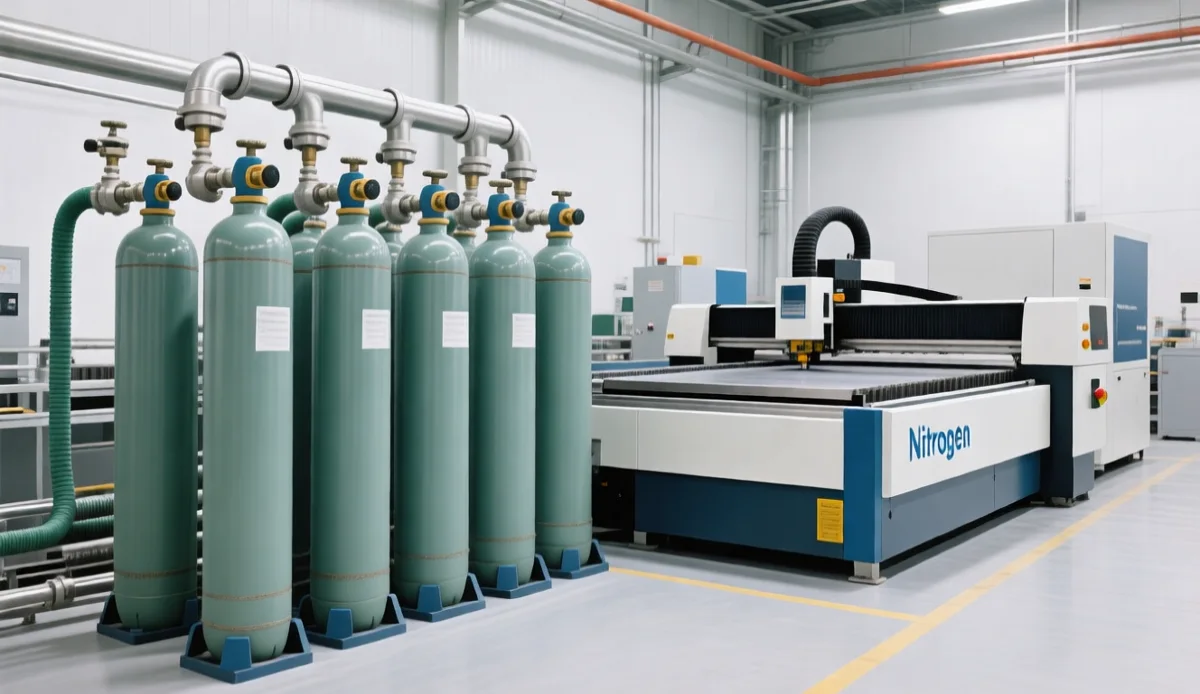
Starting-point laser cutting gas recommendations for a 6 kW-class fiber laser (typical values — always verify on your machine and thickness; quality classes per ISO 9013):
| Material | Thickness | Gas | Typical pressure | Edge result |
|---|---|---|---|---|
| Mild steel | 0.5–3 mm | N₂ or air | 8–14 bar | Clean to lightly oxidized; weld-ready |
| Mild steel | 3–6 mm | Air (cost) / N₂ (quality) | 6–14 bar | Air: thin oxide film; N₂: bright |
| Mild steel | 6–25 mm | O₂ | 0.3–2 bar | Dark oxide edge; structural use |
| Stainless steel | 0.5–6 mm | N₂ | 10–20 bar | Bright, oxide-free, weld-ready |
| Stainless steel | 6–12 mm | N₂ | 16–25 bar | Bright; gas cost dominates |
| Aluminum | 0.5–6 mm | N₂ or air | 8–16 bar | N₂ bright; air acceptable |
| Brass / copper | thin | N₂ | 8–14 bar | Clean edge on reflective metals |
Two reading notes. First, the pressure column is nozzle pressure, not bottle pressure — nozzle diameter and cut head design set the real consumption. Second, where a cell offers two gases, the choice is commercial: oxygen and air trade edge quality for cost; nitrogen buys edge quality that removes downstream work.
6. Can You Weld a Laser-Cut Edge Directly? It Depends on the Gas
This question decides more gas choices than people realize, because the answer comes straight from the edge chemistry the gas leaves behind:
- Nitrogen-cut edges are metallic and oxide-free. They can be welded directly — no grinding, no edge prep — which is why weldments and fabrications default to nitrogen. Coating (paint, powder coat, plating) also bonds without surface prep.
- Air-cut edges carry a thin oxide film. For ordinary structural welds that is usually acceptable and most shops weld air-cut mild steel without prep. For cosmetic, high-integrity, or code welds, treat it like a light contamination: wire-brush or grind the joint line first.
- Oxygen-cut edges carry a real oxide layer plus a larger heat-affected zone. For structural welds on mild steel this is routinely done — the oxide is ground or burned off by the weld process in practice — but for quality welds and always for coating, the oxide should be removed first. Coating over an oxygen-cut edge is the classic failure: paint peels off the oxide layer, not off the steel.
So the procurement version of the rule: tell the cutting shop the part’s next step. “These blanks go straight to welding and then powder coat” lands you on nitrogen; “structural frames, site-welded, painted after blasting” is fine on oxygen. Our tolerances guide covers the dimensional side of the same conversation — edge quality and tolerance are the two things to agree on before cutting.
7. Gas Consumption and Running Cost: The Hidden Line on Your Quote
Gas can be the largest variable cost in laser cutting, and it scales differently per gas:
| Gas | Pressure | Consumption driver | Relative cost |
|---|---|---|---|
| O₂ | 0.3–2 bar | Low flow, low pressure | Low — oxygen is cheap and flow is small |
| Air | 6–14 bar | Electricity for compressor + dryer | Low per m³ once equipment is amortized |
| N₂ | 8–25 bar | High flow at high pressure | High — often the dominant running cost on stainless |
Practical consequences for buyers and shops:
- Nitrogen cost grows with thickness faster than machine time does. Thicker stainless needs higher pressure and more flow, so on heavy stainless the gas bill can rival the machine-hour cost. This is a real part of why thick stainless cutting quotes look the way they do — our cost per meter guide shows the structure.
- Supply mode changes the economics. Cylinder racks are expensive per m³; liquid nitrogen bulk tanks cut unit cost sharply at volume; on-site nitrogen generators make sense at high duty cycles but cap purity and pressure. A shop’s supply mode quietly shapes its quotes.
- “Nitrogen included” quotes deserve a second look. When comparing suppliers, ask how gas is supplied and charged — a cheaper machine rate with expensive gas handling can end up costing more overall.
8. Decision Framework for Buyers
Three questions settle the laser cutting gas choice for almost any job:
- What material and thickness? Mild above ~6 mm → oxygen. Stainless and aluminum → nitrogen (or air for thin, non-critical work). Thin mild where cost rules → air.
- What happens to the edge next? Direct welding or coating → nitrogen. Structural weld with surface prep anyway → oxygen or air acceptable.
- Is the edge visible? Visible stainless or aluminum parts → nitrogen, no debate. The bright edge is what makes the part look laser-cut rather than flame-cut.
If you are ordering cut parts rather than running the machine yourself, you rarely pick the gas directly — but specifying the edge requirement (“weld-ready, oxide-free”, “paint-ready”) forces the right choice. Our cut-to-size buyer’s guide walks through the full ordering conversation.
9. Common Misconceptions
“Nitrogen is always the best gas.” Nitrogen is the best edge, not the best process. On 20 mm mild steel, oxygen cuts it at all with modest power; nitrogen would struggle and cost far more. Best is defined by the job.
“Air is free.” The air itself costs little, but dry, oil-free air requires a compressor, dryer, and filtration — capital, maintenance, and electricity. Air cutting is cheap per part only at volume, and dirty air quietly ruins optics.
“More gas pressure equals better cuts.” Pressure must match thickness, nozzle, and speed. Too little leaves dross; too much can turbulize the kerf, waste gas, and blow the cut open on thin material. Pressure is a parameter, not a volume knob.
“The edge colour is just cosmetic.” Edge colour is chemistry. A dark edge is oxide — it changes weld prep, coating adhesion, and corrosion starting points. Judge the edge by the part’s next step, not its looks.
“Gas choice doesn’t affect the quote.” On stainless especially, nitrogen consumption is a major cost driver. Two shops quoting the same part can differ mostly in how they buy and charge for gas.
Frequently Asked Questions
Why is nitrogen used in laser cutting?
Because it is inert: it ejects the melt without reacting with it, leaving a bright, oxide-free edge that can be welded, coated, or used as-is. That makes nitrogen the default for stainless steel, aluminum, and any part where edge quality matters.
Can I use compressed air instead of nitrogen?
For thin mild steel and aluminum (roughly up to 6 mm) where a lightly oxidized edge is acceptable, yes — dry, filtered compressed air cuts well and costs far less. For stainless, visible parts, or weld-ready/coat-ready edges, nitrogen remains the right gas.
What gas for laser cutting mild steel?
Thick plate (above ~6 mm): oxygen, which adds exothermic heat and cuts deep at low pressure. Thin sheet: nitrogen for clean edges or compressed air for economy. The choice hinges on thickness and what happens to the edge afterwards.
Can I weld laser-cut parts without edge preparation?
Nitrogen-cut edges, yes — they are oxide-free and weld directly. Air-cut edges usually weld fine for structural work. Oxygen-cut edges carry an oxide layer: weldable after grinding for quality welds, and the oxide must always be removed before coating.
How much nitrogen does a fiber laser use?
It scales with thickness and pressure: thin stainless at moderate pressure uses manageable flow, but 8–12 mm stainless at 16–25 bar consumes fast enough that gas can rival machine time in cost. Supply mode matters — bulk liquid or on-site generation beats cylinders at volume.
What pressure is used for laser cutting with nitrogen?
Typically 8–25 bar at the nozzle depending on material and thickness — thin sheet at the low end, thick stainless at the high end. These are starting points; the right pressure is tuned together with speed and focus for each machine.
Does the assist gas affect cutting speed?
Yes, strongly. Oxygen’s exothermic reaction speeds thick mild steel cutting; nitrogen cuts without that bonus, so thick stainless runs slower; air sits between on thin material. Speed charts are always gas-specific.
Which gas gives the cleanest cut edge?
Nitrogen — bright, metallic, oxide-free. Air leaves a thin oxide film; oxygen leaves a dark oxide layer with a larger heat-affected zone. If edge appearance or downstream fabrication matters, specify nitrogen.
Conclusion: Pick the Gas From the Part’s Next Step
The laser cutting gas decision compresses into one habit: look at what happens to the edge after cutting, then work backwards. Weld-ready or coat-ready edges on stainless and aluminum point to nitrogen; thick mild steel for structural work points to oxygen; high-volume thin sheet with no edge-quality demands points to dry compressed air. Whatever the gas, agree on edge quality and tolerances before the job is quoted — those two decisions, not the machine brand, determine whether your parts come back ready to use. If you want a gas recommendation tied to your parts, send us the material, thickness, and next fabrication step with your quote request and we will specify it explicitly.
References: ISO 9013:2017 — Thermal cutting — Classification of thermal cuts (ISO). 1 Airgas — gas applications for metal fabrication and laser cutting (airgas.com). 2 Linde — industrial gas supply for laser cutting (linde.com). 3