TL;DR: For cutting metal, the co2 vs fiber laser question was settled by physics: fiber’s 1.06 µm beam is absorbed roughly ten times better by metals than CO₂’s 10.6 µm beam, so fiber cuts faster, uses about half the electricity, needs almost no maintenance, and handles reflective metals CO₂ struggles with. CO₂ still owns non-metals (acrylic, wood, glass) and a few niche thick-section cases. If you are buying metal cutting capacity — or buying metal parts from a shop — fiber is the default; the comparison below shows exactly where each technology belongs.
1. Two Ways to Make a Beam
The difference starts at where the light comes from:
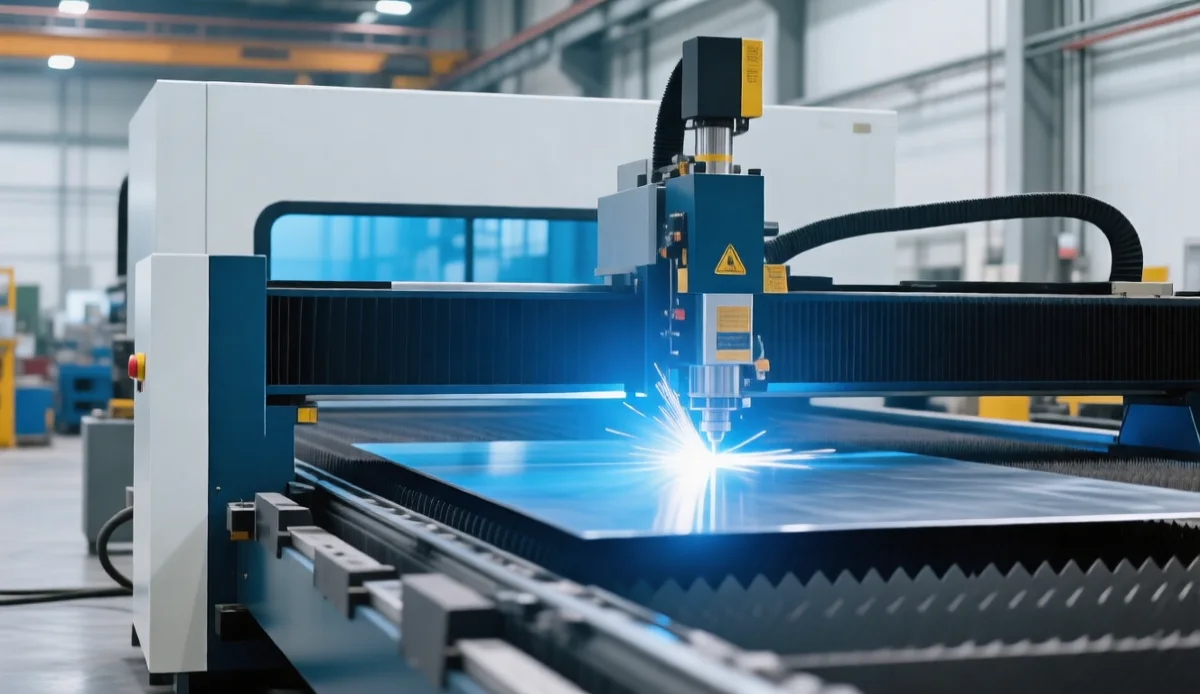
- CO₂ laser. An electric discharge excites a gas mixture (carbon dioxide, nitrogen, helium) inside a resonator. The beam is generated at 10.6 µm wavelength — far infrared — then steered to the cutting head by a train of mirrors, sometimes through a beam tunnel.
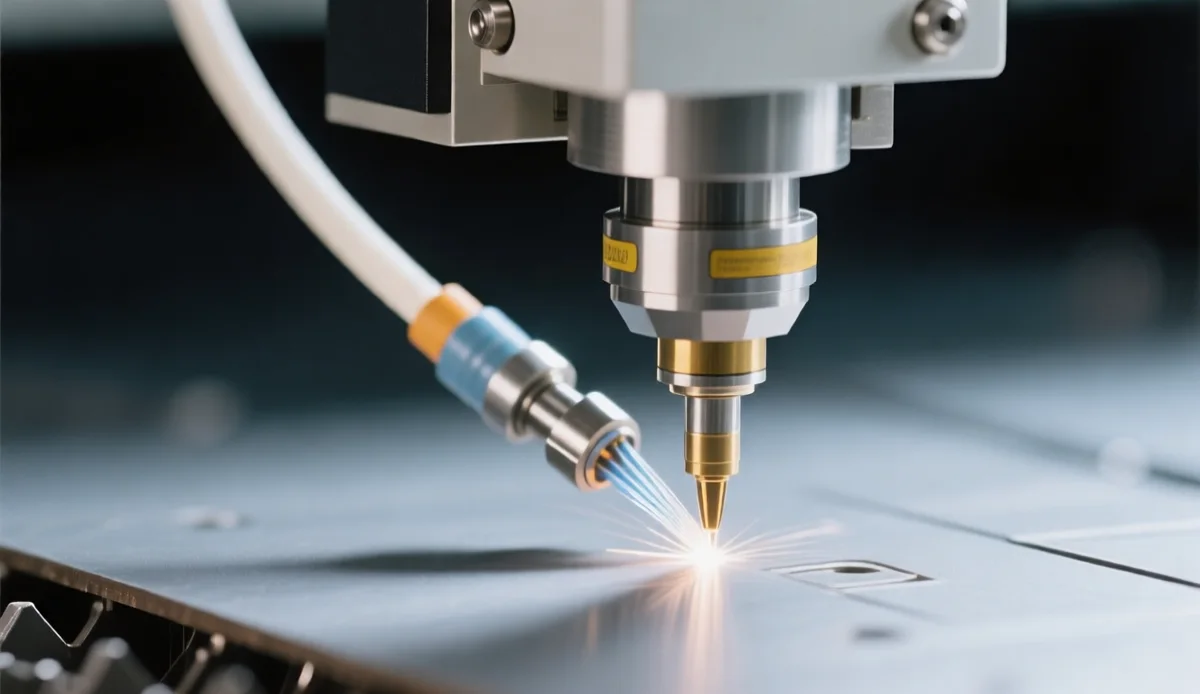
- Fiber laser. Ytterbium-doped optical fiber generates the beam at ~1.06 µm, and the light is delivered straight to the head through a flexible fiber cable — no mirrors, no gas resonator, no beam path to align.
That single difference — wavelength and delivery — drives everything in the comparison tables below. The 10× wavelength gap is why metals absorb fiber light so much better; the fiber delivery is why the machine needs so much less maintenance.
2. Metal Absorption: The Physics That Decided the Industry
Metals reflect long-wave CO₂ light and absorb short-wave fiber light. Copper and aluminum reflect the overwhelming majority of a CO₂ beam; even mild steel absorbs far better at 1.06 µm. Practical consequences:
- Speed. Fiber cuts thin-to-medium metal dramatically faster — commonly 2–3× the speed of an equivalent-power CO₂ on sheets up to about 6 mm, and the gap widened further as high-power fiber (6–12 kW and up) matured.
- Pierce and start. Fiber pierces faster and starts holes closer to edges with less spatter — a real quality difference on parts with many holes.
- Reflective metals. Stainless, aluminum, brass, copper: fiber handles them as routine production; CO₂ shops historically refused or surcharged reflective materials. The absorption physics also means fiber is safer for the machine on back-reflections with modern protection.
- Kerf and detail. Fiber’s focused spot is smaller, so the kerf is narrower (~0.1 mm typical versus ~0.2 mm) — small holes, sharp corners, and fine features survive that CO₂ tends to round over. On dense hole patterns the narrower kerf also means less material loss and less heat crowding between features.
- Edge quality. Both produce good edges on mild steel; fiber’s advantage shows on thin sheet (less heat input, tighter kerf) and on stainless/aluminum with nitrogen assist — our assist gas guide covers the edge chemistry.
3. Cutting Performance Compared
| Factor | Fiber laser | CO₂ laser |
|---|---|---|
| Wavelength | ~1.06 µm | 10.6 µm |
| Thin metal speed (≤3 mm) | 2–3× faster | Baseline |
| Medium plate (4–12 mm) | Faster, esp. at high kW | Competitive with high-power units |
| Very thick mild steel (>20 mm) | Capable; edge squareness tuning needed | Historically strong, smoother faces on some grades |
| Stainless / aluminum | Routine | Slower, more power hungry |
| Copper / brass | Yes, standard production | Marginal — mostly avoided |
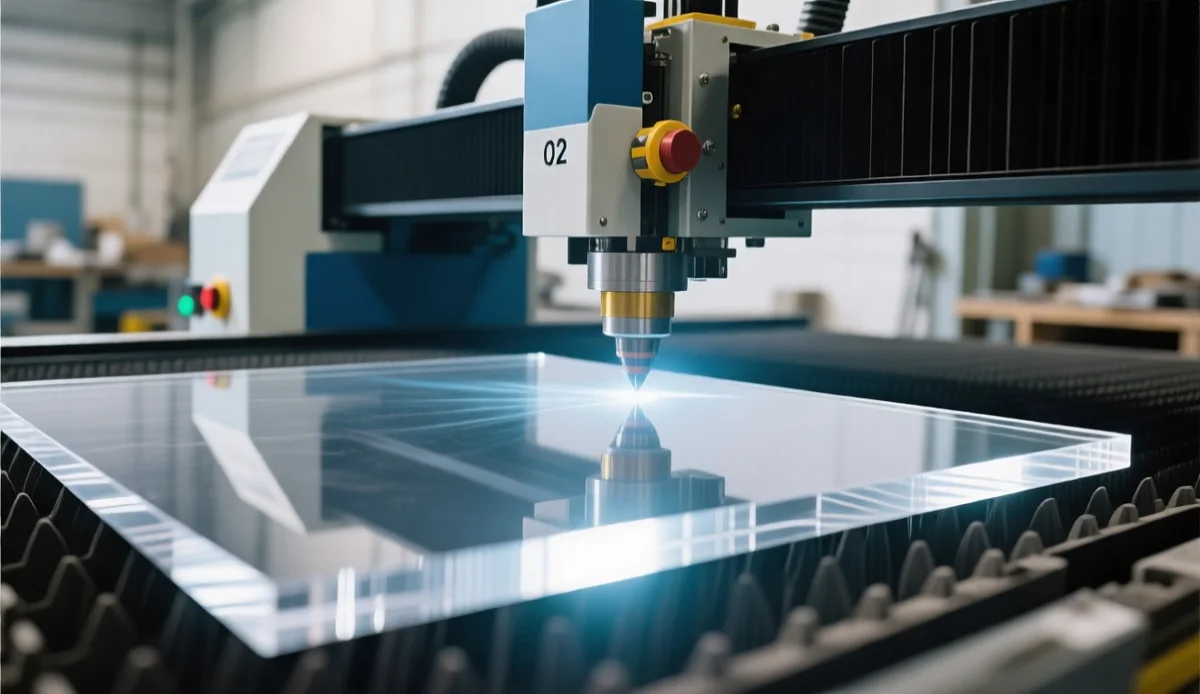
| Non-metals (acrylic, wood) | Limited/none | Excellent — CO₂’s remaining home |
The honest exceptions keep this a real comparison rather than an advertisement. On very thick mild steel, a high-power CO₂ can still lay down smoother cut faces than some fiber setups, because the long-wave beam couples differently into the thick melt column. And CO₂ remains the standard for cutting acrylic and organics, where the material absorbs 10.6 µm beautifully and fiber light simply does not couple. For metal thickness limits and speeds on fiber, see our how thick can fiber really cut analysis and the thickness/speed charts.
4. Running Cost: Efficiency and Consumables
This is where the co2 vs fiber laser decision stops being close:
| Cost line | Fiber | CO₂ |
|---|---|---|
| Wall-plug efficiency | ~30–40% | ~10% (plus chiller load) |
| Electricity per cut hour | Roughly half or less | 2–3× fiber for similar output |
| Laser gases | Assist gas only | Assist gas + resonator gas mixture (CO₂/N₂/He) |
| Optics | Sealed fiber path; one protective window + nozzle | Mirror train: alignment, cleaning, periodic replacement |
| Source lifetime | Diodes ~100,000 h, little degradation | Resonator refurbishment cycles |
| Service labour | Near-maintenance-free between services | Regular mirror/alignment/turbine service |
Industry coverage of the transition — trade publications like Laser Focus World tracked it through the 2010s — consistently put the total cost of ownership gap at 40–60% in fiber’s favour on metal duty, before counting the speed advantage. A machine that cuts twice as fast at half the electricity does not need a subtle sales pitch.
5. Reliability and Shop-Floor Reality
CO₂ machines are precision instruments with an optical train that drifts: mirrors need alignment, beam tunnels need clean gas, turbine hours need watching. Skilled maintenance keeps them excellent — many shops ran them for two decades. Fiber removes the failure modes entirely: the beam is born in the fiber and delivered in the fiber, the head carries a single sacrificial window, and alignment is not a weekly verb. For a job shop running two shifts with no dedicated laser technician, that reliability difference is often the deciding one. Uptime math compounds it: every mirror-alignment hour is an hour not cutting, and CO₂ beam quality degrades gradually between services, so parts cut Monday and parts cut Friday can differ — fiber output is flat from service to service, which matters for batch consistency on interchangeable parts.
6. Purchase Price and Market Direction
A decade ago, fiber machines carried a premium over CO₂. That gap has closed and inverted: volume production of fiber sources drove prices down while high-power CO₂ remained a low-volume product, so a modern 6–12 kW fiber machine typically costs less than a comparable-output CO₂ did at its peak. Search demand tracks the same curve — public trend data through 2025–2026 shows interest in fiber laser cutting running roughly double CO₂’s and rising, with buyers researching CO₂ mostly for non-metal work or replacement decisions. When both capital cost and running cost favour one technology, fleet renewal is only a matter of machine hours.
7. Where CO₂ Lasers Still Win
Fair is fair — CO₂ is not obsolete, it is repositioned:
- Non-metals. Acrylic (edge finish on cast acrylic is famously better with CO₂), wood, MDF, leather, textiles, glass marking. Fiber light passes through or barely couples; CO₂ owns this market.
- Very thick mild steel where face smoothness governs. Niche, but real in some heavy fabrication contexts.
- Existing installed base. A working high-power CO₂ doing thick mild steel at low utilization can still be economic — the replacement math depends on hours run, not on brochures.
Everything else in metal cutting — sheet and plate production, reflective alloys, high-mix job shops — has moved to fiber, which is why new machine sales are overwhelmingly fiber and why cost per meter quotes from modern shops assume it.
8. If You Are Buying Parts, Not Machines
Most of our readers order cut parts rather than lasers, and the comparison translates directly:
- Lead time. A fiber shop cuts your file faster and pierces denser hole patterns quicker — turnaround on thin-to-medium sheet is simply shorter.
- Material range. Need aluminum, brass, or copper parts? The shop needs fiber; a CO₂-only supplier will decline or subcontract.
- Price. Fiber’s electricity and consumables advantage flows into per-metre pricing over time — all else equal, fiber-shop quotes are competitive on thin sheet.
- Quality consistency. Less beam-path drift means less part-to-part variation across a batch — relevant when your parts must fit interchangeably (see our tolerance guide).
When you get a quote, “what machines will run my parts?” is a legitimate question — and a shop that answers “6 kW and 12 kW fiber” is telling you about speed, material range, and consistency in one sentence. Our fiber vs plasma vs waterjet comparison covers the next process question in the same buying sequence.
9. Common Misconceptions
“Fiber can cut anything CO₂ can.” Not non-metals. Acrylic, wood, and organics absorb CO₂’s wavelength and mostly ignore fiber’s. The two technologies are complementary outside of metal.
“CO₂ is dead technology.” It is repositioned, not dead: non-metal cutting and marking remain CO₂ territory, and installed thick-steel machines still run profitably. New metal-cutting purchases, though, are overwhelmingly fiber.
“Higher power always means better parts.” Power buys thickness and speed; edge quality comes from parameters, gas, and tuning (see the stainless cutting guide for how much technique matters). A well-tuned 6 kW beats a sloppy 12 kW on quality.
“The difference is only speed.” Speed is the headline, but the deeper differences are electrical efficiency, maintenance burden, reflective-metal capability, and consistency — those decide cost per part and uptime.
“Beam quality is the same once it reaches the plate.” It is not. CO₂ beam quality drifts with mirror alignment, gas purity, and resonator hours; fiber quality is set at the source and stays there. The stability difference shows up as part-to-part consistency across a production week.
Frequently Asked Questions
What is the main difference between CO2 and fiber lasers?
Wavelength and beam delivery. CO₂ generates 10.6 µm light in a gas resonator and routes it by mirrors; fiber generates ~1.06 µm light in doped fiber and delivers it through a cable. Metals absorb the fiber wavelength about ten times better, which drives fiber’s speed, efficiency, and material-range advantages on metal.
Which is better for cutting metal?
Fiber, for nearly every metal application: faster on thin and medium sheet, far cheaper to run, near-maintenance-free, and the only practical choice for reflective metals like aluminum, brass, and copper. CO₂ survives in niches — very thick mild steel face finish and legacy installed base.
Can a fiber laser cut acrylic or wood?
Generally no — those materials absorb CO₂’s wavelength, not fiber’s. Cutting non-metals is exactly where CO₂ lasers remain the standard tool.
Is fiber laser cutting cheaper to run?
Substantially: roughly 30–40% wall-plug efficiency versus about 10% for CO₂, no resonator gas, no mirror train, and long diode lifetimes. Total cost of ownership on metal duty typically comes out 40–60% lower for fiber.
Which cuts faster, CO2 or fiber?
Fiber — commonly 2–3× faster on sheet up to about 6 mm, with the advantage persisting at higher power classes. CO₂ remains competitive only in specific very-thick mild steel cases.
Can fiber lasers cut copper and brass?
Yes — the short wavelength is absorbed well enough for production cutting with modern back-reflection protection. CO₂ lasers struggle with reflective metals, which is one reason fiber displaced them for metal work.
Should I upgrade my CO2 laser to fiber?
If your work is metal and the machine runs real hours, the energy, speed, and maintenance savings usually justify replacement. If your work is non-metals, keep the CO₂ — fiber will not do that job.
What should I ask a cutting service about their lasers?
Power class (kW), material range (do they run aluminum/copper?), and lead times. A modern fiber fleet means faster turnaround, wider materials, and more consistent batch quality on your parts.
Conclusion: Fiber for Metal, CO₂ for Non-Metal, Physics for the Decision
The co2 vs fiber laser comparison ends where it began: metals absorb 1.06 µm ten times better than 10.6 µm, and everything commercial follows from that — speed, electricity, maintenance, reflective-metal capability, and cost per part. Buy fiber for metal; keep or buy CO₂ for acrylic, wood, and organics; and if you are ordering parts rather than machines, ask what runs your file, because the answer predicts your lead time, material options, and consistency. Send us your drawings through the quote page — every metal job we quote runs on the fiber fleet, and we will note the machine class, expected lead time, and any material limits directly in the response.
References: ISO 9013:2017 — Thermal cutting: classification and geometric tolerancing of cut edges (ISO). 1 Laser Focus World — industry coverage of the fiber/CO₂ market transition and laser materials processing (laserfocusworld.com). 2 Optica (formerly OSA) — optical science resources on laser wavelengths and material interaction (optica.org). 3